

What should you expect from a year-round accounting advisor?
Everything you need to know about accounting advisor
By: Sharon Heinz, EA
Date Posted: August 2026
Reading Time: 8 – 10 Minutes
Your accountant should know more about your business than what appears on last year’s tax return.
For many business owners, the traditional accounting relationship looks like this: documents are gathered after the year is over, a tax return is prepared, the tax bill is calculated, and everyone reconnects the following year.
That approach may handle tax compliance, but it leaves a major gap: most meaningful business and tax decisions happen during the year—not after December 31.
A year-round accounting advisor should help you understand your numbers, identify issues earlier, plan for taxes before deadlines arrive, and make better financial decisions as your business grows.
Tax Preparation and Year-Round Advisory Are Not the Same Thing
Tax preparation is primarily a compliance function. It reports financial activity that has already occurred.
Year-round advisory is forward-looking. It uses current financial information to help determine what is happening in the business, what may happen next, and what actions should be considered before opportunities disappear.
A strong accounting relationship can include both. The difference is that an advisor should not disappear after the tax return is filed.
Difference #1: Accurate, Current Financial Information
Good advisory starts with reliable books. If the accounting records are months behind or the balance sheet contains unresolved errors, meaningful financial and tax planning becomes difficult.
A year-round advisor should expect your bookkeeping to be reconciled and sufficiently current to support decisions. Depending on the engagement, that may include reviewing the profit and loss statement, balance sheet, cash activity, accounts receivable, accounts payable, payroll, loans, and owner or shareholder transactions.
The goal is not simply to produce financial statements. The goal is to produce financial information you can trust.
Difference #2: Regular Review of Business Performance
Business owners should not have to wait until tax season to find out whether the company had a good year.
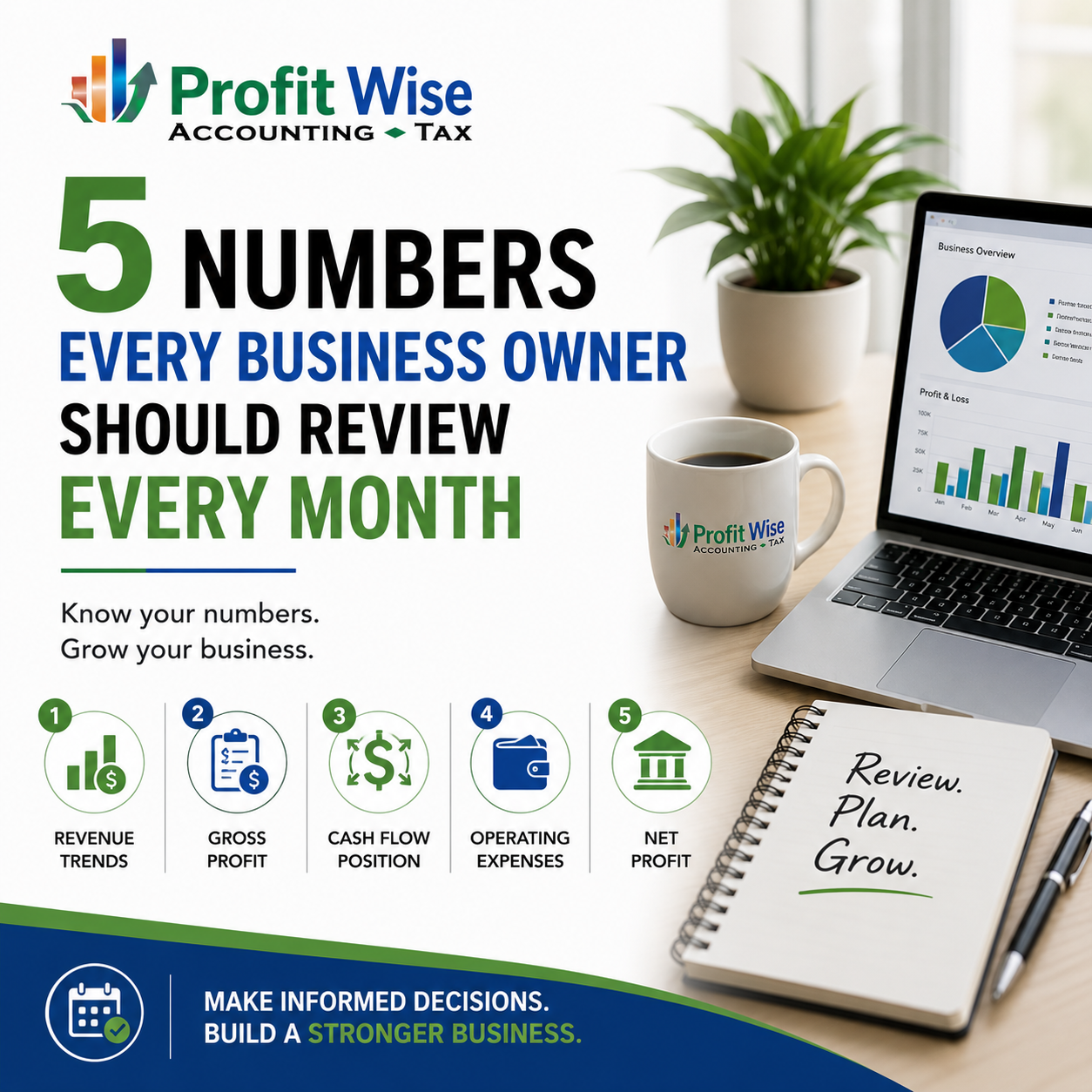
Your advisor should help you understand important trends in revenue, gross profit, operating expenses, payroll costs, cash flow, margins, debt, and profitability.
More importantly, the conversation should move beyond what the numbers are to what they mean. If payroll costs are rising faster than revenue, margins are declining, receivables are increasing, or cash flow is tightening, those issues should be identified while there is still time to respond.
Difference #3: Proactive Tax Planning Before Year-End
One of the most important differences between a tax preparer and a year-round advisor is timing.
Tax preparation generally tells you what you owe after the year has ended. Tax planning looks for legitimate opportunities before the year closes.
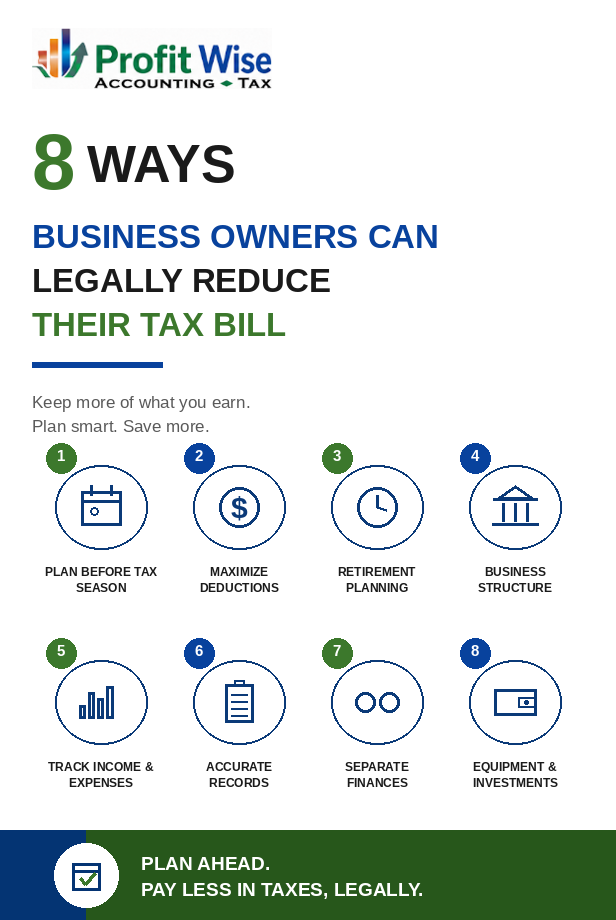
Depending on your circumstances, planning may involve estimated tax payments, retirement contributions, equipment purchases, depreciation, S-Corporation compensation, health insurance, accountable-plan reimbursements, timing of income and expenses, charitable planning, or other available strategies.
Not every strategy is appropriate for every business. The advisor’s role is to evaluate your actual numbers and circumstances—not simply hand you a generic list of deductions.
Difference #4: S-Corporation and Owner Compensation Review
For S-Corporation owners, year-round accounting should include more than recording distributions.
An advisor should help monitor issues such as reasonable compensation, shareholder distributions, payroll, officer health insurance, retirement contributions, reimbursements, and other shareholder activity that may affect the business or tax return.
Waiting until tax preparation to discover that shareholder payroll was handled incorrectly can create unnecessary cleanup, amended filings, or missed planning opportunities.
Difference #5: Estimated Tax Planning
Unexpected tax bills are often a sign that tax obligations were not monitored closely enough during the year.
A year-round advisor should periodically evaluate projected taxable income and compare it with estimated tax payments and withholding.
Business income can change quickly. A strong first half of the year, a major contract, a large capital gain, or a significant change in profitability can materially change the amount of tax you should be preparing to pay.
The objective is not necessarily to eliminate every dollar due at filing. It is to reduce avoidable surprises and help you plan cash flow around your tax obligations.
Difference #6: Help Understanding Cash Flow vs. Profit
Profit and cash are not the same thing.
A company can report a profit while struggling to pay bills. It can also have significant cash in the bank while underlying profitability is deteriorating.
A good advisor should help you understand why. Debt payments, equipment purchases, accounts receivable, owner distributions, inventory, loan proceeds, and other transactions can create significant differences between taxable income, accounting profit, and available cash.
Understanding those differences is essential when deciding whether the business can afford additional employees, equipment, distributions, debt, or expansion.
Difference #7: Guidance Before Major Business Decisions
Some of the most valuable conversations with an accountant should happen before a transaction—not after it.
Before making a major financial decision, your advisor may be able to help evaluate the accounting, cash-flow, and tax consequences.
Examples include buying equipment, purchasing or selling a business, adding an owner, changing entity structure, hiring employees, purchasing real estate, taking on significant debt, expanding locations, or making large shareholder distributions.
Once a transaction is complete, some planning options may no longer be available.
Difference #8: Clear Explanations—Not Just Reports
Receiving a profit and loss statement every month is not the same as receiving advisory services.
Financial statements are valuable only if you understand what they are telling you.
A year-round advisor should be able to explain your numbers in practical business language, identify items that deserve attention, and help you understand the financial consequences of different choices.
You should leave an advisory conversation knowing what matters, why it matters, and what should happen next.
Difference #9: Coordination Between Bookkeeping, Payroll, Tax and Advisory
Your financial information is interconnected.
Bookkeeping affects financial statements. Payroll affects tax returns. Owner compensation affects S-Corporation planning. Estimated taxes depend on projected income. Year-end planning depends on accurate books.
When these functions operate independently, important information can fall through the cracks.
A strong advisory relationship connects the pieces so that bookkeeping, payroll, tax compliance, and tax planning support the same financial picture.
Difference #10: A Relationship That Becomes More Valuable as Your Business Grows
The financial questions facing a $100,000 business are usually different from those facing a $500,000 or $1 million business.
As your company grows, decisions become more expensive and mistakes can become more consequential.
A year-round advisor should develop an increasingly detailed understanding of your business, including how you make money, your cost structure, tax position, financial goals, and recurring challenges.
That institutional knowledge can make the accounting relationship significantly more valuable over time.
What Should You Ask Your Current Accountant?
- If you are evaluating whether you have a true year-round advisory relationship, consider asking:
- How often are my financial statements reviewed?
- Do we project my tax liability before year-end?
- Will someone alert me when my numbers indicate a problem?
- Do we review my S-Corporation salary and distributions?
- Are my estimated tax payments based on current projections?
- Who should I contact before making a major financial decision?
- Do you help me understand cash flow and profitability?
- Do we have scheduled planning conversations during the year?
If most of these conversations occur only after December 31, you may have a tax preparation relationship rather than an advisory relationship.
The Goal Is Better Decisions Before It Is Too Late
Year-round accounting advisory is not about scheduling meetings simply to have meetings.
It is about having accurate information and professional guidance available when decisions can still be changed.
The best time to discover a tax-planning opportunity is before the deadline. The best time to identify a cash-flow problem is before cash becomes critical. And the best time to evaluate a major business decision is before the contract is signed.
That is the difference between reporting history and using accounting information to help shape what happens next.
Looking for More Than Annual Tax Preparation?
Profit Wise Accounting & Tax works with business owners who want a more proactive relationship with their accounting firm.
We help connect accurate accounting, financial reporting, payroll, tax compliance, and tax planning so business owners have better information throughout the year—not just when their tax return is due.
If you are ready to move beyond once-a-year tax preparation, talk with us about year-round accounting and advisory support.
Better information. Earlier decisions. Smarter tax planning.
About the author
Sharon Heinz, EA, is the owner of Profit Wise Accounting. Profit Wise provides tax preparation, strategic tax planning, accounting, bookkeeping, payroll, and business advisory services for small and growing businesses.
Ready to stop reacting to taxes? Schedule a Tax Planning Consultation with Profit Wise Accounting to build a proactive strategy tailored to your business. Profit Wise can become your Year-Round Tax Advisory.