

Pest Control Accounting and Bookkeeping
Know which routes make money. Understand technician costs. Plan for taxes. Build recurring revenue without losing control of cash flow.
Profit Wise helps pest control companies with bookkeeping, payroll, tax planning and financial guidance built around the economics of a route-based service business.
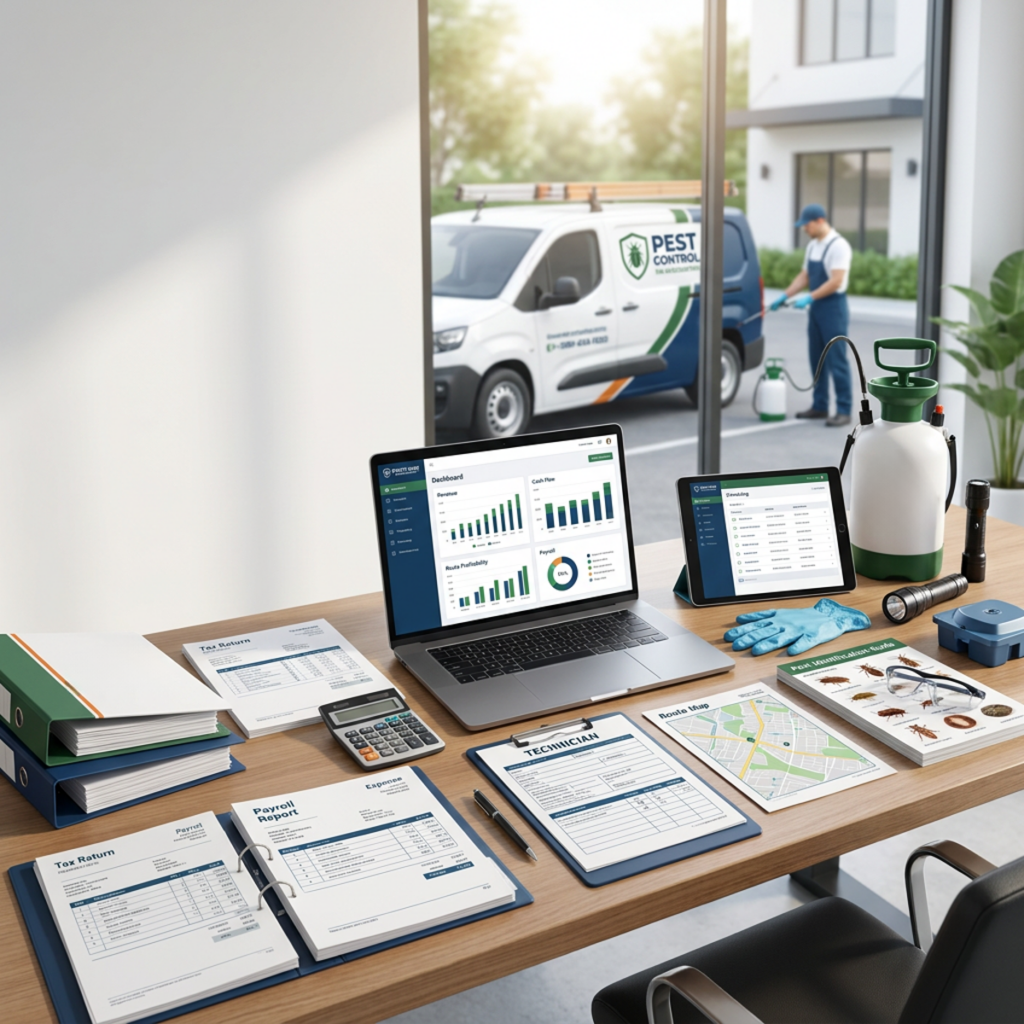
A Busy Route Does Not Always Mean a Profitable Route
Pest control companies can look busy from the outside while profit quietly disappears through inefficient routes, rising technician costs, chemicals, fuel, callbacks, fleet expenses and weak pricing. Recurring customers create valuable revenue, but only when the company understands what it costs to service those accounts.
If you own a pest control company, your accounting should help answer questions like these:
Profit Wise helps turn those questions into financial information you can actually use.
Accounting built around the pest control business model
Pest control is not a generic service business. Many companies depend on recurring residential or commercial accounts, scheduled routes, field technicians, vehicles and a mix of labor, chemicals and equipment. Your accounting system should reflect those realities.
We help pest control owners improve visibility into:
Know What Each Route is really producing
A route can generate a lot of revenue and still underperform. Drive time, technician wages, payroll taxes, fuel, chemicals, re-services and customer density all affect the economics.
Your financial reporting should help management evaluate:
- Revenue by route, territory or service type when the underlying systems support it
- Direct labor relative to revenue
- Chemical and material costs
- Recurring revenue trends
- Customer concentration
- Accounts receivable and collection patterns
- Vehicle and fuel costs
- Gross profit and operating profit
- The financial impact of adding another technician or truck
The goal is not to create reports for the sake of reports. It is to identify where the business is making money, where margin is slipping and what deserves management attention.
Numbers Every Pest Control Owner Should Know
Recurring Revenue: Recurring service agreements can create predictable revenue and customer value. Owners should understand how recurring revenue is growing and how much it costs to service those accounts.
Gross Profit: Sales growth matters less when labor, chemicals, materials and other direct costs are rising faster than revenue.
Technician Labor Cost: Wages are only part of labor cost. Payroll taxes, overtime and other employer costs also affect profitability.
Route Economics: Dense, well-managed routes can perform differently from routes with excessive drive time, low pricing or frequent re-services.
Customer Acquisition Cost: Marketing should ultimately produce profitable customers, not just leads. Knowing what you spend to acquire business helps evaluate growth decisions.
Customer Retention: Recurring-service businesses benefit from understanding cancellations and retention because replacing lost customers requires additional sales and marketing investment.
Fleet Cost: Trucks, fuel, maintenance, insurance and financing can quietly consume cash and margin.
Cash Flow: A profitable P&L does not guarantee enough cash for payroll, taxes, vehicles, debt payments and growth.
Tax Liability: Owners should understand projected tax obligations during the year instead of discovering the number after year-end.
Services
Pest Control Bookkeeping & QuickBooks
QuickBooks should help you understand the business – not simply store transactions until tax season. Where appropriate, accounting data can be coordinated with information from pest control or field-service software to create more useful management reporting.
Profit Wise can help pest control companies maintain accurate books and organize financial information so owners have a clearer view of performance. Services may include:
Payroll for Pest Control Companies
Field payroll can become complicated as a pest control company grows. Multiple technicians, overtime, commissions or incentives, payroll taxes and new hires create administrative work and compliance risk. Employee-versus-independent-contractor classification should be based on the actual working relationship and applicable law – not simply on whether the company prefers to issue a 1099.
Profit Wise provides payroll support so owners can spend less time on payroll administration and more time managing customers, technicians and growth.
Tax Planning for Pest Control Business Owners
Tax preparation records what already happened. Tax planning gives the owner an opportunity to make informed decisions while there is still time to affect the result. The correct tax strategy depends on the owner’s facts. Profit Wise focuses on legal tax reduction, compliance and planning before the tax return becomes a history report.
For pest control business owners, proactive planning may include reviewing:
Financial Guidance for a Growing Pest Control Company
Growth creates expensive decisions. Before adding another technician, truck, route or service area, you need to know what the business can support.
We help owners use their numbers to evaluate decisions involving:
- Hiring another technician
- Adding or replacing vehicles
- Expanding into another territory
- Adding service lines
- Pricing and margin pressure
- Marketing investment
- Cash reserve targets
- Debt and equipment financing
- Owner compensation
- Tax consequences of major purchases and growth decisions
How Healthy is your pest control business- Really?
Take the 3-Minute Pest Control Financial Health Check
Why pest control companies choose profit wise
Profit Wise Accounting & Tax works with business owners who want more than bookkeeping entries and a tax return. We want you to understand what is driving the financial performance of your company.
FAQs about pest control accounting
Serving Pest Control Companies
Profit Wise Accounting & Tax works with pest control owners who want accurate books, dependable payroll, proactive tax planning and clearer financial information.
Your Routes Are Planned. Your Financial Strategy Should Be Too.
If you are ready to understand where your pest control company is making money, where cash is going and what you can do before tax season arrives, talk with Profit Wise.
